
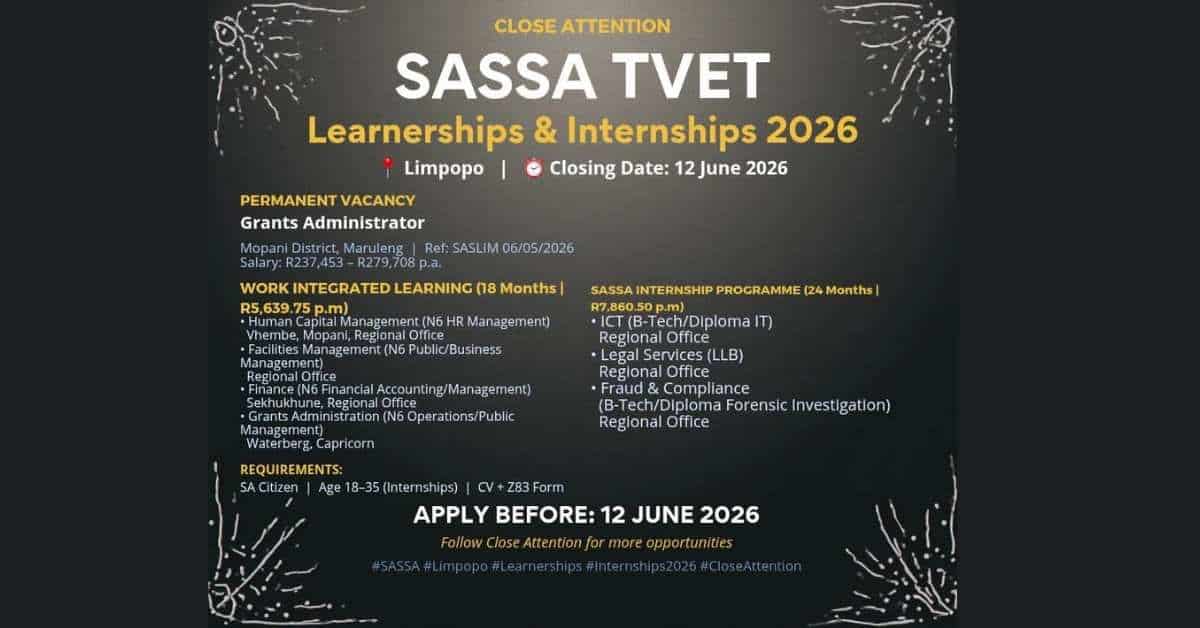
What Are Seta, SASSA and TVET Learnerships and Internships in 2026?
Last Updated: May 2026 | Fact-Checked & Verified by the editorial team.
In South Africa, the landscape of employment is rapidly evolving, and the need for skilled professionals has never been more urgent. SASSA (South African Social Security Agency) plays a pivotal role in this transformation by providing learnerships and internships aimed at equipping young South Africans with the necessary skills to thrive in the job market.
SETA (Sector Education and Training Authority) is a crucial component of this system, overseeing various sectors to ensure that training aligns with industry needs. TVET (Technical and Vocational Education and Training) institutions offer practical training that prepares students for specific careers. In 2026, SASSA’s focus on TVET learnerships is set to provide numerous opportunities for those seeking to enhance their employability.
Why Seta Learnerships Remain One of South Africa’s Top Career Opportunities
Seta learnerships are not just educational programmes; they are gateways to sustainable employment. With the South African economy facing challenges such as high unemployment rates, particularly among the youth, these learnerships offer a structured pathway to gain work experience while earning a stipend.
The urgency of participating in a Seta learnership cannot be overstated. In a job market that increasingly demands qualifications and experience, learnerships provide both, making candidates more attractive to potential employers. Furthermore, as industries evolve, learnerships are continuously updated to reflect current trends, ensuring that participants are equipped with relevant skills.
Related Opportunities 2026
Seta Learnerships 2026: Sectors Offering Training and Employment Opportunities
As we look to 2026, various sectors are poised to offer exciting learnership opportunities. These include:
- Information Technology: With the digital transformation sweeping across industries, IT skills are in high demand.
- Healthcare: The need for trained healthcare professionals continues to grow, especially in light of the recent pandemic.
- Construction: As urban development projects expand, skilled tradespeople are essential.
- Logistics and Supply Chain: The rise of e-commerce has created a surge in demand for logistics professionals.
- Agriculture: Sustainable farming practices are becoming increasingly important, necessitating skilled workers.
How Seta Learnerships Work and What Participants Can Expect
Seta learnerships typically last between 12 to 24 months and combine theoretical learning with practical experience. Participants can expect:
- Structured Training: A blend of classroom learning and on-the-job training.
- Mentorship: Guidance from experienced professionals in the field.
- Assessment: Regular evaluations to track progress and skills development.
Participants will also gain valuable insights into workplace dynamics, enhancing their readiness for full-time employment.
Minimum Requirements for Seta Learnerships 2026
To qualify for Seta learnerships, applicants generally need to meet the following minimum requirements:
- Age: Typically between 18 and 35 years.
- Education: A minimum of Matric, although some programmes may require specific qualifications.
- Skills: Basic computer literacy and communication skills are often essential.
Documents Needed When Applying for Seta Learnerships
When applying for Seta learnerships, ensure you have the following documents ready:
- Curriculum Vitae (CV): A well-structured CV highlighting your education and any relevant experience.
- Identity Document: A certified copy of your South African ID.
- Matric Certificate: Proof of your secondary education.
- Proof of Address: A recent utility bill or similar document.
- Reference Letters: From previous employers or educators, if applicable.
Monthly Stipends and Benefits Offered Through Seta Programmes
Participants in Seta learnerships can expect to receive a monthly stipend, which varies by sector and programme but generally ranges from R3,500 to R6,000. Additionally, benefits may include:
- Transport Allowance: Assistance with commuting costs.
- Skills Development: Accredited training that enhances employability.
- Networking Opportunities: Connections with industry professionals.
Seta Learnerships 2026: Application Process Explained Step by Step
The application process for Seta learnerships can be straightforward if you follow these steps:
- Research Available Programmes: Identify which learnerships align with your career goals.
- Prepare Your Documents: Ensure all necessary documents are in order.
- Submit Your Application: Follow the instructions provided by the specific Seta or organisation.
- Attend Interviews: Be prepared for interviews and assessments.
- Accept Offer: If successful, review and accept the offer.
Common Mistakes That Cause Seta Learnership Applications to Be Rejected
Avoid these common pitfalls to increase your chances of success:
- Incomplete Applications: Ensure all required documents are submitted.
- Generic CVs: Tailor your CV to highlight relevant skills and experiences.
- Ignoring Deadlines: Submit applications well before the closing date.
- Poor Interview Preparation: Research the organisation and practice common interview questions.
SASSA Internships 2026: Everything You Need to Know
SASSA internships provide another avenue for gaining valuable work experience. These internships are designed to assist young South Africans in acquiring skills that are essential for their career development.
Internships typically last between 6 to 12 months and focus on various administrative and operational roles within SASSA. Participants will engage in meaningful work while contributing to the agency’s mission of providing social security services to the public.
Who Can Apply for SASSA Internship Programmes in 2026?
Eligibility for SASSA internships generally includes:
- Age: Applicants must be between 18 and 35 years old.
- Education: A minimum of Matric, with preference given to those with relevant tertiary qualifications.
- Skills: Basic computer skills and effective communication abilities are crucial.
SASSA Internship Requirements and Eligibility Criteria
To apply for SASSA internships, candidates must provide:
- A Comprehensive CV: Highlighting educational background and skills.
- Identity Document: A certified copy of your ID.
- Matric Certificate: Proof of completion.
- Tertiary Qualifications: If applicable, include certified copies of any diplomas or degrees.
What To Do This Month: Practical Action Plan
- Research: Identify Seta learnerships and SASSA internships that align with your career goals.
- Prepare Your CV: Update your CV to reflect relevant skills and experiences.
- Gather Documents: Collect all necessary documents for your applications.
- Network: Reach out to professionals in your desired field for insights and advice.
- Apply: Submit your applications before deadlines.
- Prepare for Interviews: Practice common interview questions and research the organisations you applied to.
About the Author
*eugene da Ponte is a South African careers writer who covers learnerships, internships, bursaries and employment opportunities for young job seekers.*
Sources & References
By taking advantage of SASSA TVET learnerships and internships in 2026, you can position yourself for a successful career in a rapidly changing job market. Don’t miss out on these valuable opportunities!